

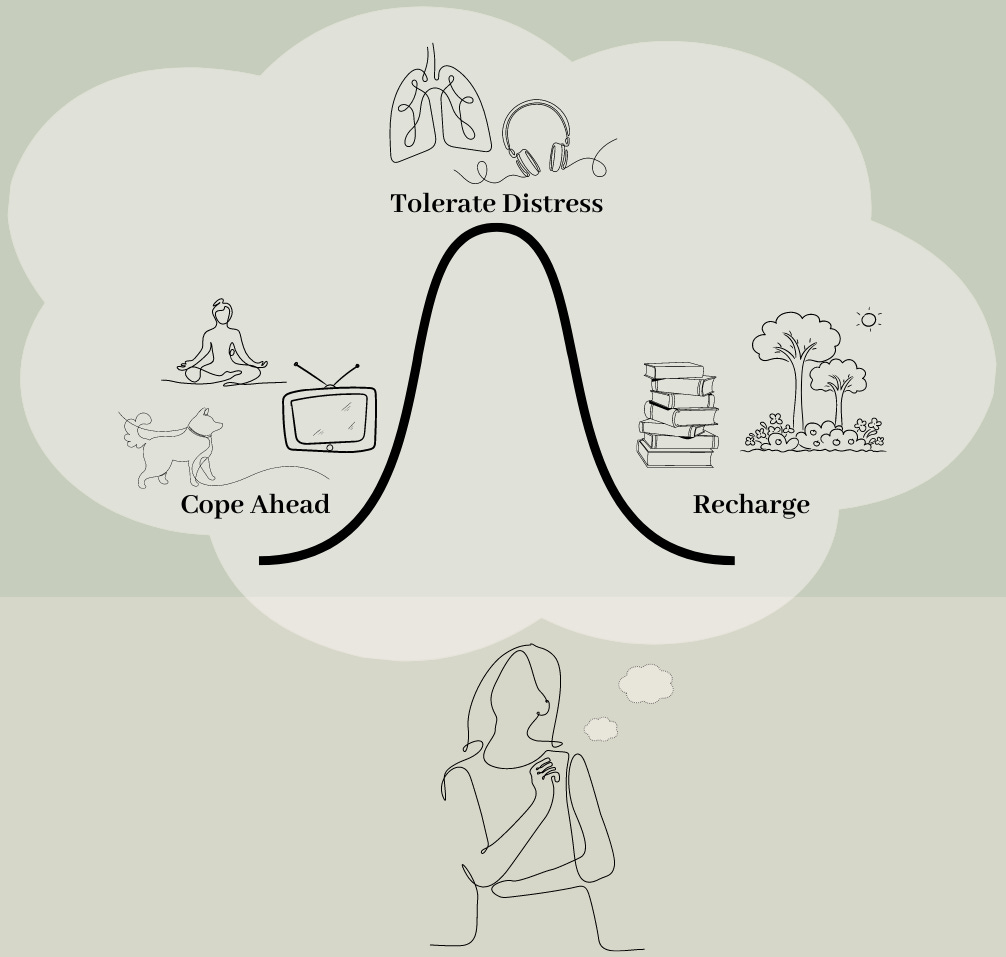
In the last Quick Tips post, we discussed protective factors and vulnerability factors and how we can lean into our protective factors to balance out an increase in vulnerability factors. If you missed this post, you can find it here.
In this post, we’re going to talk about how we can use our knowledge of protective factors and vulnerability factors to scaffold unavoidable high-stress experiences
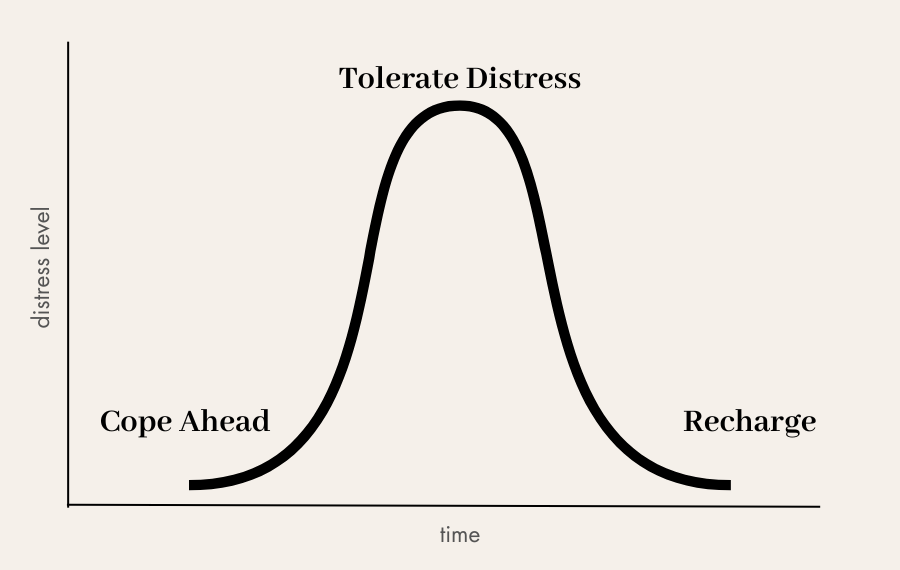
My go-to example when discussing this with patients is going to the dentist. I hate going to the dentist. That chair is its own circle of hell. I tend to avoid it (admittedly, not great) but when I do get around to making an appointment, I’m liable to completely regress and act like a child if I don’t adequately prepare myself. Suffice to say that, for me, having a dentist appointment on the calendar is a big, fat vulnerability factor.
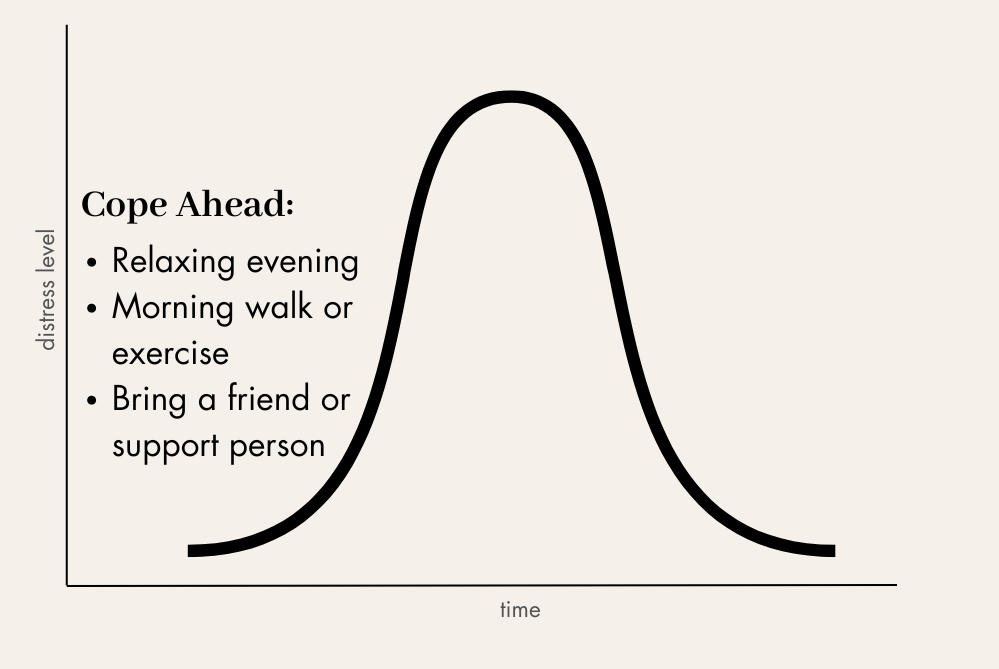
Cope Ahead
Let’s say I have a Monday morning appointment. I’m going to start building my scaffolding Sunday with things I know help me to manage stress and reliably fill my cup. For me, this might look like spending time outside, taking a long walk with my dog, meeting a friend for coffee or lunch. I’m going to prioritize getting in three solid meals because the last thing I want is for my mood to be further hindered by low blood sugar or poor nutrition. I’m also going to stay away from alcohol because alcohol is a depressant and, again, I don’t need anything to further tank my mood.
In the evening, I might wind down by watching a show like The Office or reading a book. I’m also a big fan of using a jade-roller or ice-roller in the evening. I hear it does good things for your skin, but mostly I just find it soothing.
A good night’s sleep is a critical protective factor, but we also want to be realistic. If I have a dentist appointment in the morning, it’s unlikely I’m going to sleep well the night before, despite my best efforts. This is something I’m going to radically accept this and not beat myself up about it. More on radical acceptance later.
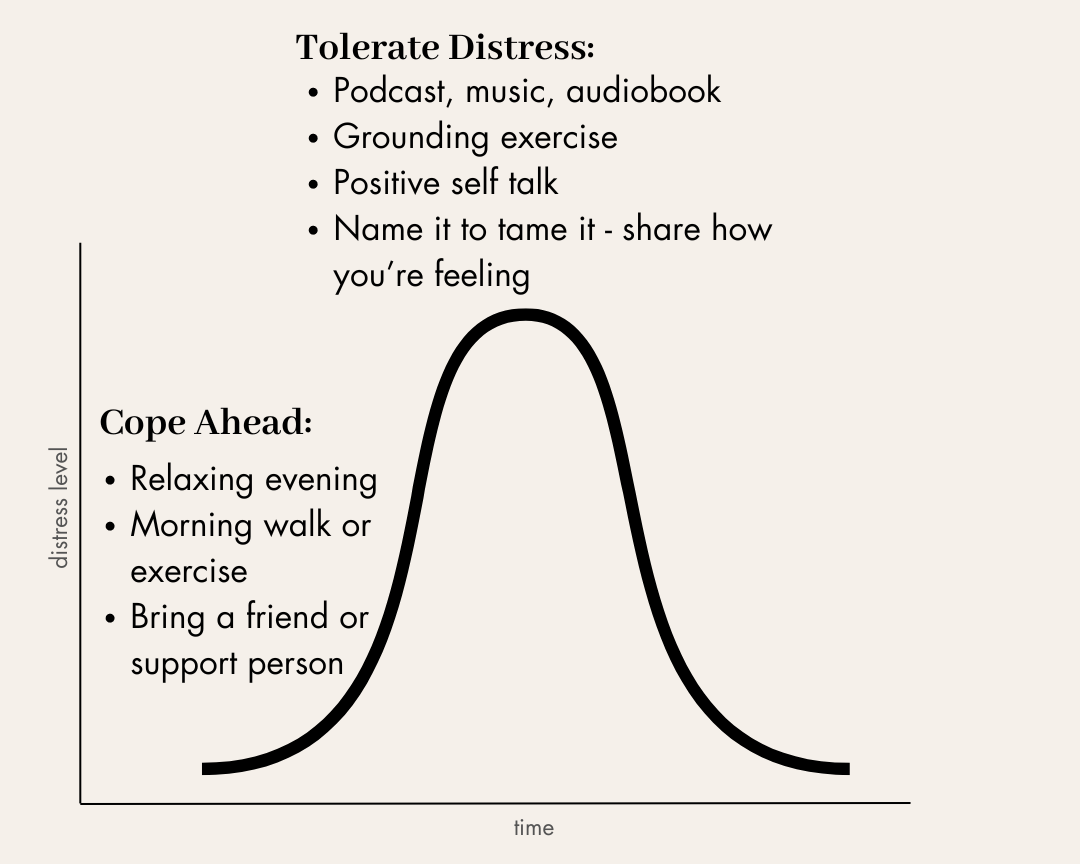
Tolerate Distress
The next morning is the big event. This is when we build the roof of our scaffolding. A big part of this is accepting that it’s going to suck. I’m not going to pretend otherwise or try to convince myself that after three decades of hating the dentist my mind is suddenly going to change. At this point, it’s about doing what I can to make the experience suck a tiny bit less.
So, I might have someone come with me for moral support. I’ll usually let the hygienist and dentist that I’m terrified. This way, we’re on the same page and they can support me along the way. I might do a grounding exercise or a progressive muscle relaxation. I might try to distract myself with a podcast, audiobook, or music. (Growing up, the dentist was the only time I was allowed to watch Cartoon Network, which made the experience ever so slightly more bearable.) I also might think about what I have planned for after the appointment? How am I going to recharge?
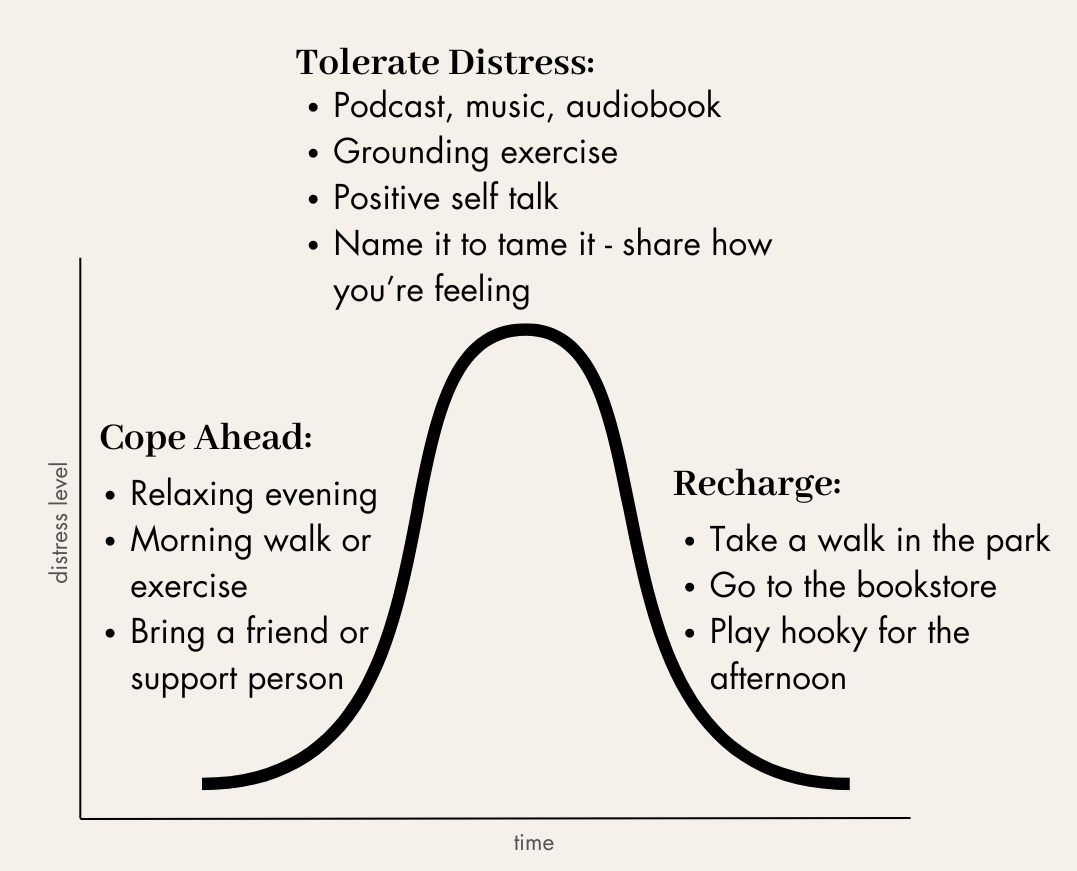
Recharge
At the end of the appointment, I expect to be drained. The cup that I’d been filling with all of my cope ahead strategies beginning Sunday morning emptied during the appointment; now it’s time to recharge. For me, this may look like a walk in the park, a trip to the bookstore, or even playing hooky for the afternoon. Whatever this looks like for you, it should serve to soothe, reward, and recharge— refilling your cup after a difficult experience.
Again, none of these things are going to make a difficult experience fun or easy.
But coping ahead, developing strategies to tolerate the distress and a plan to recharge later can provide as a structure to help you cope a little bit better.
So, how do you cope ahead? How do you recharge? What’s a stressor that you might scaffold?
Warmly,
Isabelle